

The South African Revenue Service (SARS) has implemented administrative penalties for taxpayers who fail to submit their tax returns on time. These penalties are charged monthly based on the taxpayer’s assessed taxable in come and can accumulate for up to 35 months if the return remains outstanding. In this article, we’ll cover how these penalties are calculated, who they apply to, and how to request remission if you have a valid reason for late submission. We’ll also clarify which entities, including individuals, companies, and trusts, are subject to penalties.
How SARS Penalties Are Applied
SARS imposes administrative penalties for the late or non-submission of tax returns, and these penalties are calculated monthly. The penalties will continue to accumulate until the tax return is filed or until a maximum period of 35 months is reached. Penalties apply to both individuals and companies. However, as of now, penalties for trusts are not yet being enforced—although SARS may begin imposing them in the future.
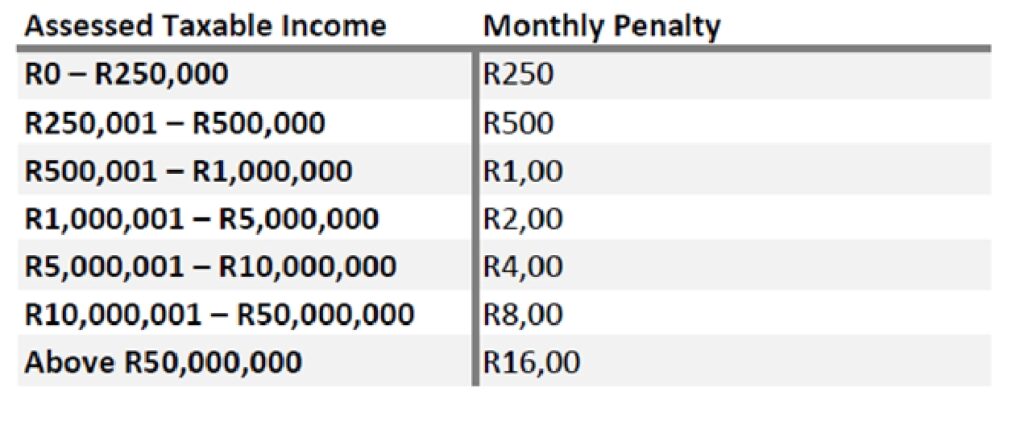
The monthly penalty amounts currently raised by SARS (please note that these amount can change) are determined by the taxpayer’s assessed taxable income, as shown in the table below:
Example: Penalty Calculation for Individuals
For example, if a taxpayer with a taxable income of R600,000 fails to submit their tax return for the 2023 tax year, SARS will levy a monthly penalty of R1,000. If the taxpayer delays submission for six months, the accumulated penalty will beR6,000 (R1,000 × 6 months).
For high-income taxpayers, the penalties can escalate rapidly. A taxpayer with an assessed taxable income of more than R50 million can face a maximum penalty ofR560,000 (R16,000 × 35 months) for a single late return.
It’s important to note that currently, interest is not payable on these administrative penalties. The penalties are fixed amounts based on the taxpayer’s taxable income and are applied monthly for late submission of tax returns. While SARS does charge interest on various tax debts and certain other penalties, the administrative penalties for late submission of returns are not subject to additional interest charges.
Penalties for Companies
Just like individual taxpayers, companies are also subject to penalties for the late or non-submission of tax returns. The penalties are calculated based on the taxable income of the company, following the same structure as for individuals.
Although SARS is not currently enforcing penalties on trusts, companies should be aware that non-compliance can still result in significant financial penalties. It’s important to note that the penalty accumulation continues every month until the return is submitted, so delaying can become costly.
How the Penalties Accumulate
First of each month: Penalties are levied on the first day of each month following the deadline.
Penalty period: The penalty accumulates every month until the return is submitted.
Maximum cap: Penalties are capped at 35 months, meaning a taxpayer could potentially face up to 35 months’ worth of penalties if the return remains outstanding for that period.
Requesting Remission of Non-Compliance Penalties
If there are valid reasons for failing to submit your tax return on time, SARS does allow you to request a remission (waiver or reduction) of the penalties. Valid reasons can include serious illness, loss of income, or errors made by a tax advisor.
While SARS is stringent about enforcing penalties, they may consider waiving penalties for taxpayers who demonstrate that their delay was due to circumstances beyond their control.
When SARS May Not Impose Penalties
There are certain circumstances where SARS may not impose penalties, or the penalties may be reduced:
First-Time Non-Compliance: If this is your first instance of late submission and you have a strong compliance record, SARS may offer leniency.
Voluntary Disclosure Program (VDP): If you voluntarily come forward to rectify undeclared income or other compliance issues, SARS may waive penalties. Under the VDP, understatement penalties are often waived, and administrative penalties may also be reduced or eliminated.
Income Below the Tax Threshold: Individuals earning below the taxable threshold (R95,750 for taxpayers under 65 in the 2023/2024 tax year) may not face penalties for not filing a return.
Dormant Companies: If a company has not traded or earned income during the tax year, and this has been declared to SARS, penalties may not be levied for non-submission.
How to Avoid Penalties
The best way to avoid penalties is to ensure that your tax returns are submitted on time. Here are a few tips to stay compliant:
Mark the deadlines: Make note of the key tax return deadlines, particularly for personal income tax, provisional tax, and company tax.
Seek professional advice: If you’re unsure about your tax obligations, consult with a tax professional who can help you meet all deadlines.
Conclusion
SARS’ penalties for late or non-submission of tax returns can quickly accumulate, particularly for those in higher income brackets. It’s important to file your returns on time to avoid these penalties, which can continue to accumulate monthly until submission. While SARS is not currently imposing penalties on trusts for non-submission, this may change, so it’s advisable to stay informed.
If you do incur penalties, you have the option to request remission if you can demonstrate valid reasons for the delay. Taking timely action is essential to minimise unnecessary costs and maintain a good compliance record with SARS.
Related reading: SARS Auto Assessments.